
Examining Tiered Benefit Structures Across Mobile Virtual Currency Live Dealer Platforms for Elite Participants
Smartphone-based platforms that handle virtual assets for live dealer games have developed multi-level incentive frameworks designed to retain dedicated high-stakes users, and these systems track activity through points, tiers, and redemption options that scale with participation volume. Data from industry reports show that such structures often combine immediate cashback with longer-term loyalty multipliers, while blockchain ledgers record each transaction to provide verifiable histories for participants who engage across multiple sessions.
Core Components of Layered Reward Systems
Observers note that the foundation of these frameworks rests on tier progression, where users advance from entry-level status to higher brackets by accumulating specific volumes of wagers or session durations in live dealer environments. According to figures released by the Malta Gaming Authority, mobile platforms operating with digital currencies reported average tier advancement rates that increased by 18 percent during the first three quarters of 2026, and this growth coincided with expanded live table offerings such as blackjack and roulette variants streamed directly to smartphone applications. High-stakes participants frequently receive access to private tables and customized betting limits once they reach upper tiers, while lower levels focus on smaller, more frequent rewards that encourage consistent daily engagement.
What's interesting is how integration with virtual asset wallets allows automatic conversion of earned points into tokens that users can transfer or stake within the same ecosystem, and this process eliminates traditional withdrawal delays that once affected fiat-based systems. Research from the Canadian Gaming Association indicates that platforms utilizing these combined reward and wallet features maintained user retention rates above 72 percent among accounts classified as high-volume during the period ending November 2026.
Smartphone-Specific Mechanics and Live Dealer Integration
Live dealer venues on mobile devices incorporate real-time notifications that alert users to upcoming bonus rounds or tier-specific events, and these alerts often trigger during peak streaming hours when table activity reaches its highest levels. Experts have observed that push-based updates tied to layered rewards can increase session lengths by prompting users to extend play in order to unlock the next multiplier level, whereas static desktop interfaces lack the same immediacy. The reality is that many applications now embed biometric verification steps before releasing higher-tier rewards, which adds security layers while maintaining the fluid experience required for high-stakes live interactions.
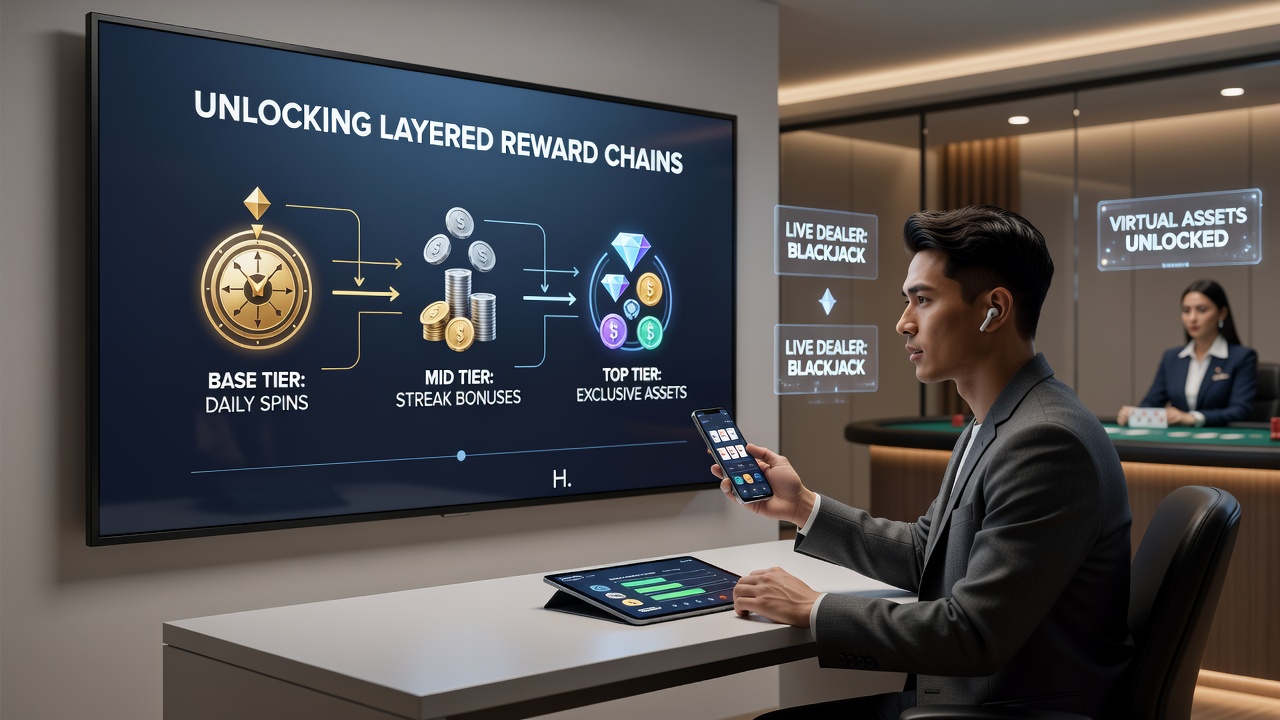
Studies compiled by the International Gaming Standards Association reveal that live dealer streams optimized for smartphones accounted for 41 percent of total virtual asset wagering volume in regulated markets by late 2026, and this share continues to rise as resolution improvements allow clearer card and wheel visibility. Participants dedicated to these venues often combine reward chains across multiple games, accumulating points from roulette spins that later apply to blackjack tables, which creates interconnected pathways rather than isolated bonuses.
Regulatory Context and Platform Adaptations in 2026
Regulatory bodies such as the Nevada Gaming Control Board have issued updated guidelines that address transparency requirements for reward calculations in digital asset environments, and these rules took effect in November 2026 for platforms targeting mobile users. Compliance involves publishing clear formulas for how wager amounts translate into tier points, while audits verify that live dealer outcomes remain independent of reward distribution mechanics. Platforms that adopted these standards early reported smoother approval processes for new high-stakes features, and this alignment has encouraged further expansion of smartphone-specific live tables.
Yet another development involves partnerships between gaming operators and virtual asset exchanges that facilitate instant reward redemptions, and such collaborations reduce friction for users who move between live sessions and external wallet activities. Data released by the European Gaming and Betting Association shows that cross-platform reward portability contributed to a 25 percent rise in average monthly activity among high-stakes accounts during the final months of 2026.
Conclusion
Layered reward structures in smartphone-based virtual asset live dealer venues continue to evolve through combined tracking of wager volume, session frequency, and cross-game accumulation, with regulatory updates in November 2026 reinforcing transparency standards across multiple jurisdictions. These systems deliver measurable progression paths for dedicated participants while maintaining operational separation between game outcomes and incentive allocation.